

ENT
Audiometry tracking, endoscopic documentation, and ear-nose-throat examination workflows for ENT practices
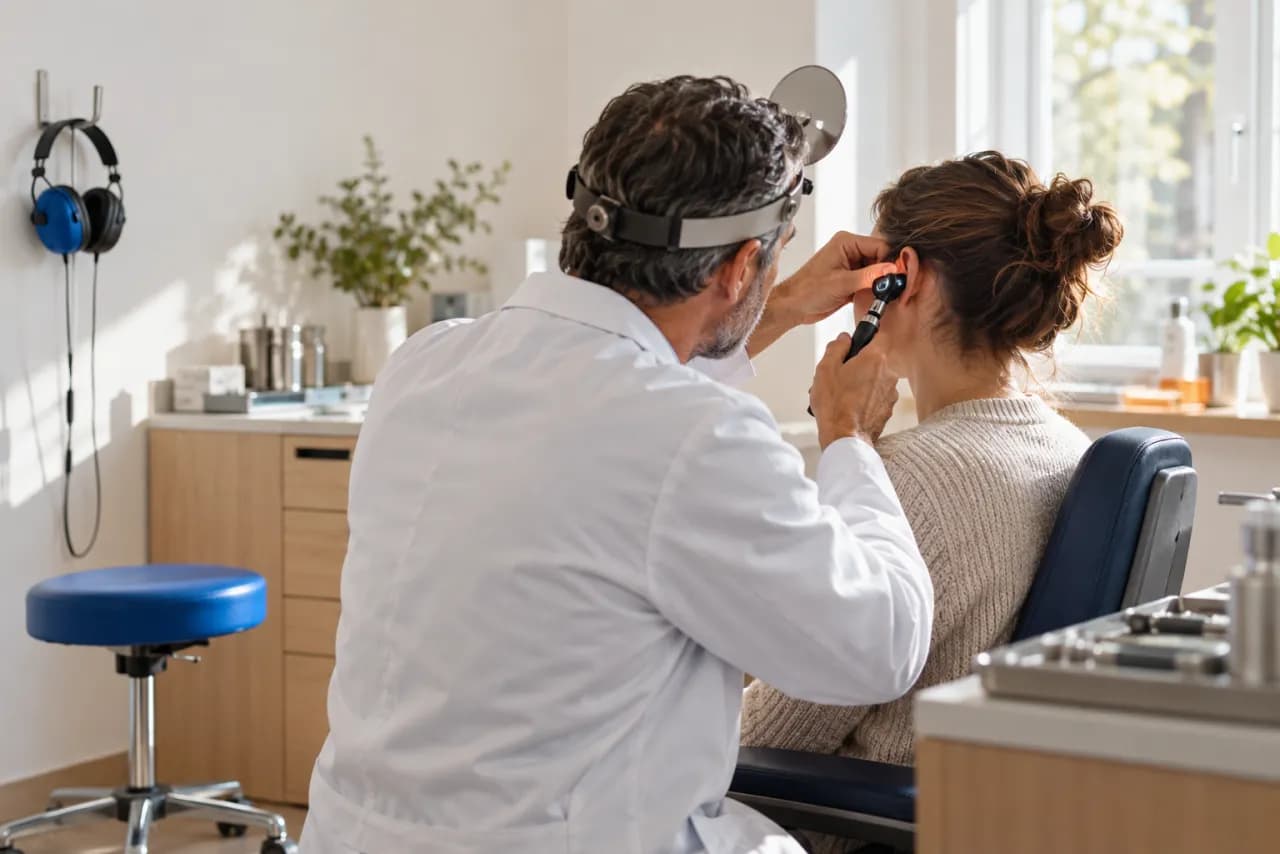
08:15 — a patient arrives with three weeks of muffled hearing.
The audiometry booth exports a fresh audiogram, and TUCAN aligns it against last year's tracing to flag a new 30 dB drop at 4 kHz. The endoscopic view is captured to the record, a structured ENT note is drafted from the exam findings, and the matching GOÄ code is attached — so the referral for hearing-aid fitting is decided, documented, and billed before the patient leaves the chair.
What your practice gains
Hearing changes seen sooner
Audiometry is trended against the patient's baseline, so shifts surface before the next visit.
Findings caught early
Endoscopic findings are read across encounters and flagged when they change.
Notes that keep pace
Visit documentation is drafted from the exam and diagnostics instead of typed after the clinic.
Coding without the afterthought
The matching GOÄ/EBM code is proposed with each note, so nothing billable slips away.
Follow-up that carries itself
Review intervals and referrals are scheduled with prior diagnostics carried forward automatically.
Clinical Use Cases
Hearing Loss Assessment
Serial audiometry trending with structured documentation and automated referral for hearing-aid evaluation.
Chronic Sinusitis
Track endoscopic findings, imaging, and treatment response across visits in a structured sinusitis care plan.
Head & Neck Surveillance
Structured surveillance workflows combining endoscopy, imaging linkage, and pathology result tracking.
What changes for your practice
Hearing and airway intelligence
Audiometry, endoscopy, and imaging are read together so the clinician sees the trend, not just today's snapshot.
- Audiogram trending across visits with automatic threshold-shift flags
- Endoscopic images and video attached directly to the encounter
- Sinus and temporal-bone imaging reviewed in the same chart view
Documentation that writes itself
Structured ENT exams and procedure notes are drafted from the encounter instead of typed after it.
- Structured ENT exam note generated from recorded findings
- Procedure documentation templated for endoscopic and office interventions
- One-click correction rather than blank-page dictation
Continuity of care
Surveillance, recalls, and remote checks keep chronic and post-procedure ENT patients on track without manual chasing.
- Automated recall scheduling for head-and-neck surveillance
- Side-by-side audiogram comparison for progressive hearing loss
- Remote follow-up consults with the full ENT history in view
The connected pipeline
Symptom intake
The patient completes a structured ENT intake form covering hearing, balance, nasal, and throat symptoms before the visit.
Diagnostics captured
Audiometry results and endoscopic images are imported into the record with trending against prior studies.
Clinician review
The ENT specialist reviews the structured findings and imaging, confirms the diagnosis, and records it in the chart.
Structured note + coding
A structured ENT visit note is generated and the matching GOÄ/EBM billing code is attached automatically.
Follow-up scheduling
Surveillance recalls, procedure follow-ups, and remote checks are scheduled with the ENT history carried forward.
How the data moves
Symptom and diagnostic capture
History, audiometry, and endoscopic images are captured through structured forms.
TUCAN diagnostic review
Audiometry and imaging are read into a trend with change and reference-range signals.
FHIR record
Diagnostics, findings, and outcomes are written to the patient's structured clinical record.
Structured note + coding
A visit note is drafted from the reviewed encounter for the ENT specialist to confirm.
Follow-up schedule
Reviews and referrals are scheduled with prior diagnostics carried forward.
Where the AI works
Each agent owns a distinct part of the ENT workflow, so the clinician stays in control of every decision.
Reads audiometry and endoscopic imaging into a trend and flags changes since the last visit before the clinician opens the chart.
Drafts the structured visit note and diagnostic summary from the reviewed encounter for one-click correction.
Guides diagnostic intake and follow-up steps, keeping review intervals and referrals on track.
How Dudoxx delivers it
Structured ENT notes
Symptom intake forms
Remote follow-up
GOÄ/EBM coding
Integrations
Audiology Devices
Structured import of audiometry results from connected testing equipment for trend analysis.
Head & Neck Imaging
DICOM connectivity for CT and MRI studies with measurement tools and structured report generation.
Lab & Pathology
Direct lab order placement for biopsies with automated result retrieval and report linking.