
Nephrology
Renal function tracking, dialysis documentation, and chronic kidney disease workflows for nephrology practices
11:20 — a CKD staging review opens.
A patient with declining kidney function arrives with a fresh set of labs. TUCAN recalculates the eGFR, flags the shift from stage 3b to stage 4, and drafts a structured visit note with a stage-aligned care plan — the nephrologist confirms the renal-adjusted dosing, the nephrotoxic-agent flag clears the medication list, and the coded encounter is documented before the next patient.
What your practice gains
Function changes seen sooner
Renal function labs are trended against baseline, so decline surfaces before the next visit.
Staging kept in view
CKD stage and risk markers are read across encounters and flagged when they shift.
Notes that keep pace
Visit and dialysis documentation is drafted from the encounter instead of typed afterward.
Coding without the afterthought
The matching GOÄ/EBM code is proposed with each note, so nothing billable slips away.
Follow-up that carries itself
Monitoring intervals and reviews are scheduled with prior labs carried forward automatically.
Clinical Use Cases
Chronic Kidney Disease
Stage-based care pathways combining lab trending, blood pressure control, and complication monitoring.
Dialysis Care
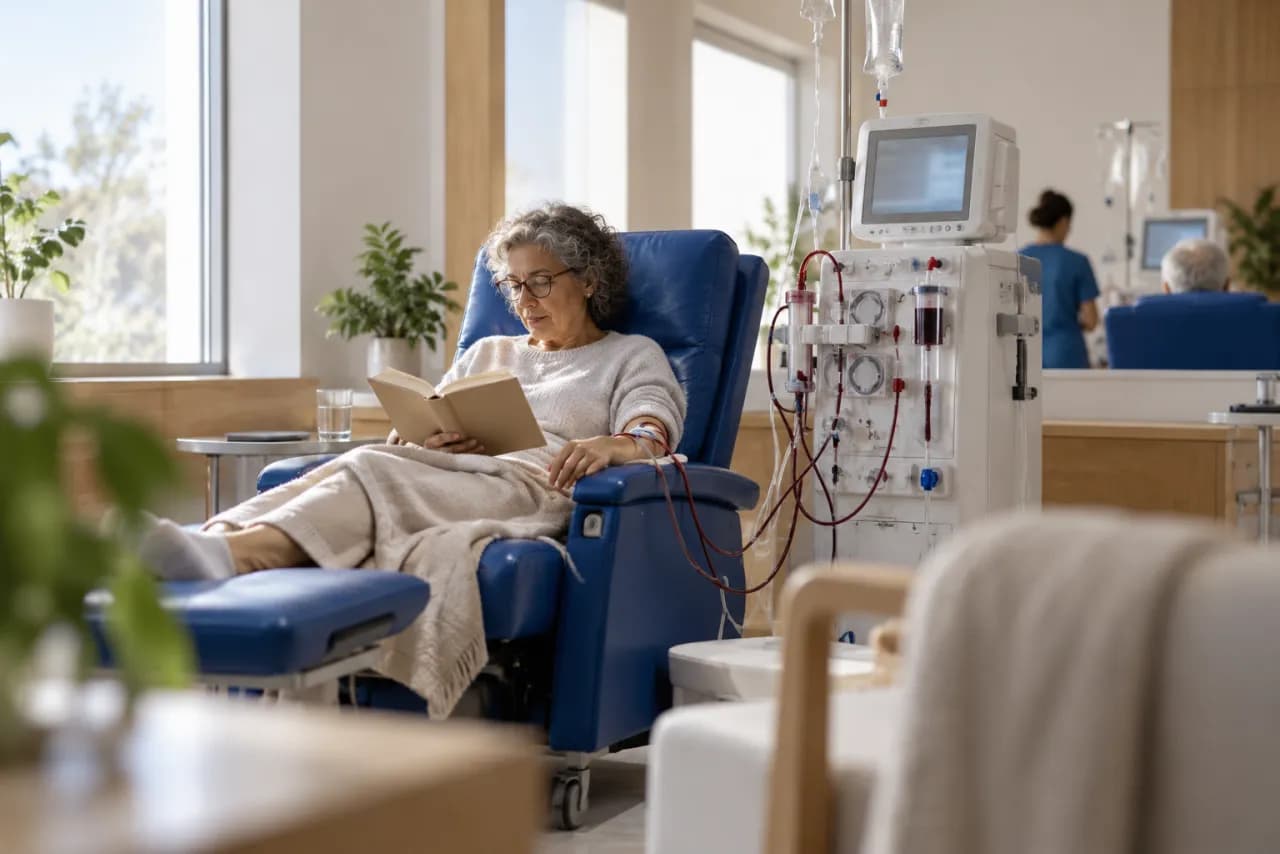
Track dialysis adequacy, access-site health, and inter-session weight with structured session documentation.
Transplant Follow-Up
Longitudinal immunosuppression monitoring, lab trending, and structured post-transplant surveillance.
What changes for your practice
Renal intelligence
Creatinine, eGFR, and electrolytes are read as one longitudinal signal with stage-change alerts, not isolated results.
- Creatinine and eGFR trended with stage-change and reference-range flags
- Automated CKD staging with stage-aligned care plans
- Weight, blood pressure, and fluid status tracked for volume management
Documentation that writes itself
Structured visit notes and dialysis records are drafted from the renal review instead of typed after it.
- Structured Encounter note generated from the lab review
- Hemodialysis and peritoneal-dialysis session records with adequacy monitoring
- One-click correction rather than blank-page dictation
Safer prescribing
Renal-adjusted dosing carries calculators, interaction checks, and nephrotoxic-agent flagging end to end.
- Renal-adjusted dosing calculators for every prescription
- Nephrotoxic-agent flags before the prescription is signed
- Access-site and adequacy tracking folded into follow-up
The connected pipeline
Data intake
Creatinine, eGFR, electrolytes, and fluid-status readings are pulled into a single trended view before the visit.
Staging & analysis
TUCAN recalculates eGFR, flags any CKD stage change, and proposes a documented stage-aligned care plan.
Clinician review
The nephrologist confirms the plan, applies renal-adjusted dosing, and records it directly in the chart.
Structured note + coding
A structured visit note is generated and the matching GOÄ/EBM billing code is attached automatically.
Monitoring & follow-up
Lab recalls, dialysis reviews, and transplant surveillance are scheduled with the trend history carried forward.
How the data moves
Data and lab intake
Renal history and lab results are captured through structured, scored forms.
TUCAN staging and analysis
Renal function labs are read into a trend with staging and reference-range signals.
FHIR record
Labs, staging, and dialysis data are written to the patient's structured clinical record.
Structured note + coding
A visit note is drafted from the reviewed encounter for the nephrologist to confirm.
Monitoring schedule
Follow-up labs and reviews are scheduled with prior results carried forward.
Where the AI works
Each agent owns a distinct part of the nephrology workflow, so the clinician stays in control of every decision.
Reads renal function labs into a trend and flags declining function and staging changes before the clinician opens the chart.
Drafts the structured visit note and staging summary from the reviewed encounter for one-click correction.
Guides intake and follow-up steps, keeping monitoring intervals and reviews on track.
How Dudoxx delivers it
Renal-function trending
Structured visit notes
Fluid & symptom diaries
Remote CKD reviews
GOÄ/EBM coding
Integrations
Lab Networks
Direct connectivity for renal panels and electrolyte studies with electronic ordering and automated result import.
Dialysis Equipment
Structured import of dialysis session parameters for adequacy tracking and treatment documentation.
Telemedicine
Secure video consultations for remote renal assessment and follow-up appointments.