

DudoxxDudoxx
Comprehensive neurological care from structured examination to longitudinal monitoring

Neurology

Cognitive assessments, seizure tracking, and neurological examination workflows for comprehensive neurology care

Neurology — Comprehensive neurological care from structured examination to longitudinal monitoring

09:15 — a new-onset seizure referral opens.

A patient arrives after two unexplained seizures, months of scattered diary notes in hand. TUCAN pulls the seizure history, medication trials, and prior EEG report into one timeline, drafts a structured neuro-exam note the neurologist confirms in seconds, and flags an interaction in the proposed anticonvulsant — so the titration plan is set, documented, and coded before the patient leaves the room.

What your practice gains

Change seen sooner

Cognitive and seizure records are trended against baseline, so shifts surface before the next visit.

Patterns caught early

Exam findings are read across encounters and flagged when they progress.

Notes that keep pace

Visit documentation is drafted from the exam instead of typed after the clinic.

Coding without the afterthought

The matching GOÄ/EBM code is proposed with each note, so nothing billable slips away.

Follow-up that carries itself

Monitoring intervals and reviews are scheduled with prior findings carried forward automatically.

Clinical Use Cases

Epilepsy Management

Combine seizure diaries, medication titration, and EEG report linkage into a longitudinal epilepsy care plan.

Dementia Care

Serial cognitive scoring with caregiver-reported data and structured staging for progressive cognitive decline.

Movement Disorders

Track Parkinson's and movement-disorder progression with structured rating scales and medication response over time.

What changes for your practice

Longitudinal neuro-intelligence

Seizure diaries, cognitive scores, and rating scales are read as one continuous signal instead of scattered PDFs.

  • Seizure frequency and trigger patterns surfaced across the whole history
  • Serial MMSE/MoCA scores trended with automatic decline flags
  • Movement-disorder rating scales charted against medication changes

Documentation that writes itself

The structured neuro exam and consult note are drafted from the encounter rather than typed after it.

  • Cranial-nerve, motor, sensory, and reflex findings captured to the FHIR record
  • Structured consult note generated from the reviewed examination
  • One-click correction rather than blank-page dictation

Safer medication management

Anticonvulsant and neuro-specific protocols carry interaction checks and titration tracking end to end.

  • Drug-interaction flags before the prescription is signed
  • Titration schedules tracked against seizure response over time
  • Adherence and side-effect capture folded into follow-up

The connected pipeline

  1. History intake

    Seizure diaries, prior medication trials, and imaging reports are pulled into a single structured timeline before the visit.

  2. Structured neuro exam

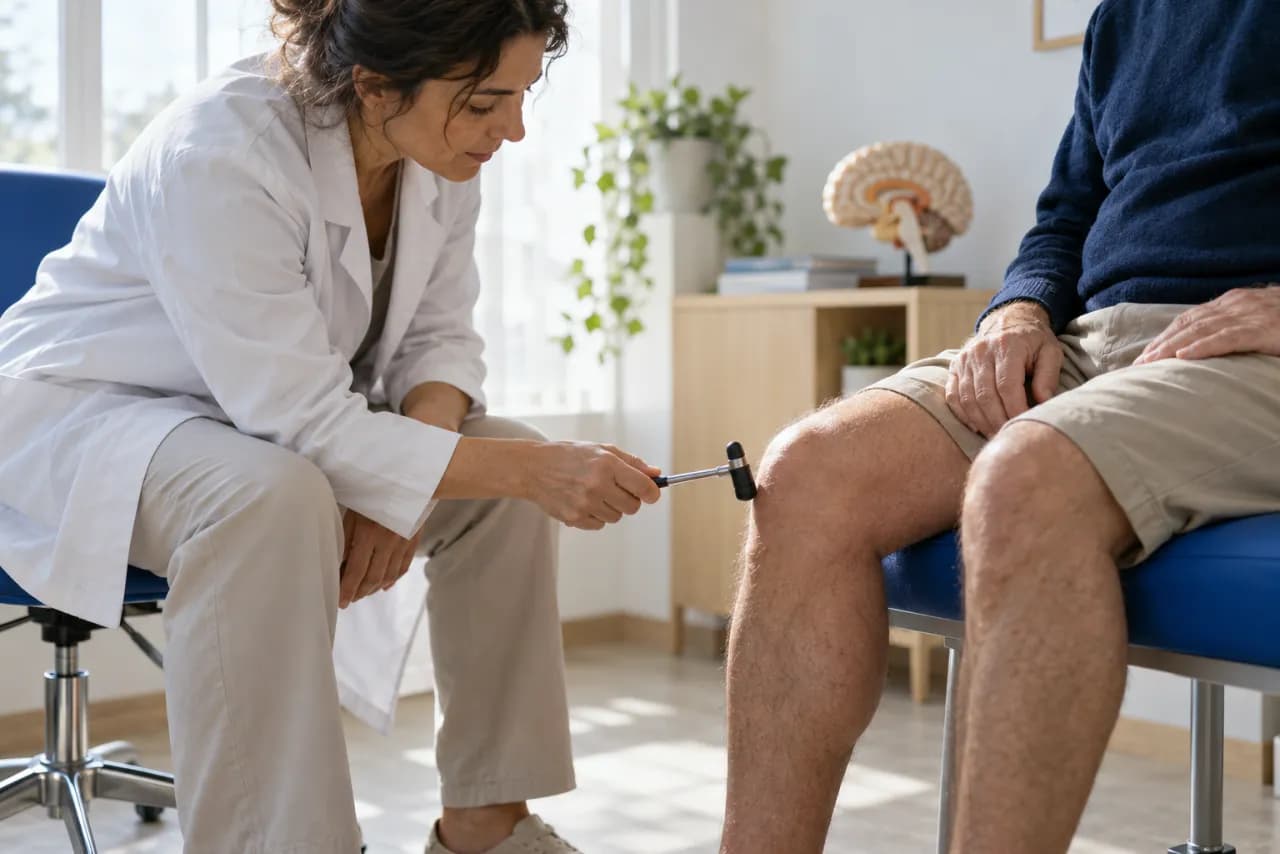
    Configurable templates capture cranial-nerve, motor, sensory, and reflex findings directly into the chart.

  3. AI review

    TUCAN summarises the history and exam, highlights medication interactions, and proposes a documented differential.

  4. Structured note + coding

    A structured consult note is generated and the matching GOÄ/EBM billing code is attached automatically.

  5. Monitoring & follow-up

    Seizure tracking, cognitive recalls, and titration reviews are scheduled with the full history carried forward.

How the data moves

  1. History and exam capture

    History and neurological exam findings are captured through structured, scored forms.

  2. TUCAN review

    Cognitive scores and seizure records are read into a trend with change signals.

  3. FHIR record

    Exam findings and outcomes are written to the patient's structured clinical record.

  4. Structured note + coding

    A visit note is drafted from the reviewed encounter for the neurologist to confirm.

  5. Monitoring schedule

    Follow-up reviews are scheduled with prior findings carried forward.

Where the AI works

Each agent owns a distinct part of the neurology workflow, so the clinician stays in control of every decision. TUCAN is the orchestrator that plans and runs workflows, Condor is the longitudinal clinical memory that supports documentation and diagnosis, and FlowAgent guides multi-step workflows.

TUCAN

Reads cognitive scores and seizure records into a trend and flags progression before the clinician opens the chart.

Condor

Drafts the structured visit note and exam record from the reviewed encounter for one-click correction.

FlowAgent

Guides exam intake and follow-up steps, keeping monitoring intervals and reviews on track.

How Dudoxx delivers it

Integrations

Neuroimaging Systems

DICOM connectivity for MRI, CT, and EEG report integration with measurement tools and report generation.

Lab Connectivity

Direct lab order placement for neurological panels with automated result retrieval and trend visualisation.

Telemedicine

Secure video consultations for remote neurological assessment and follow-up appointments.

See Dudoxx in Your Clinical Workflow

Book a focused walkthrough for your specialty and practice size. We will map Dudoxx capabilities to your existing workflow and deployment requirements.