
Skip to content

Doctors and nurses

Context before the patient sits down.

In the consultation.

Allergies, last findings and open tasks before the visit; notes and forms during it; drafted letters for your review after. Condor gathers from the record, and you decide.
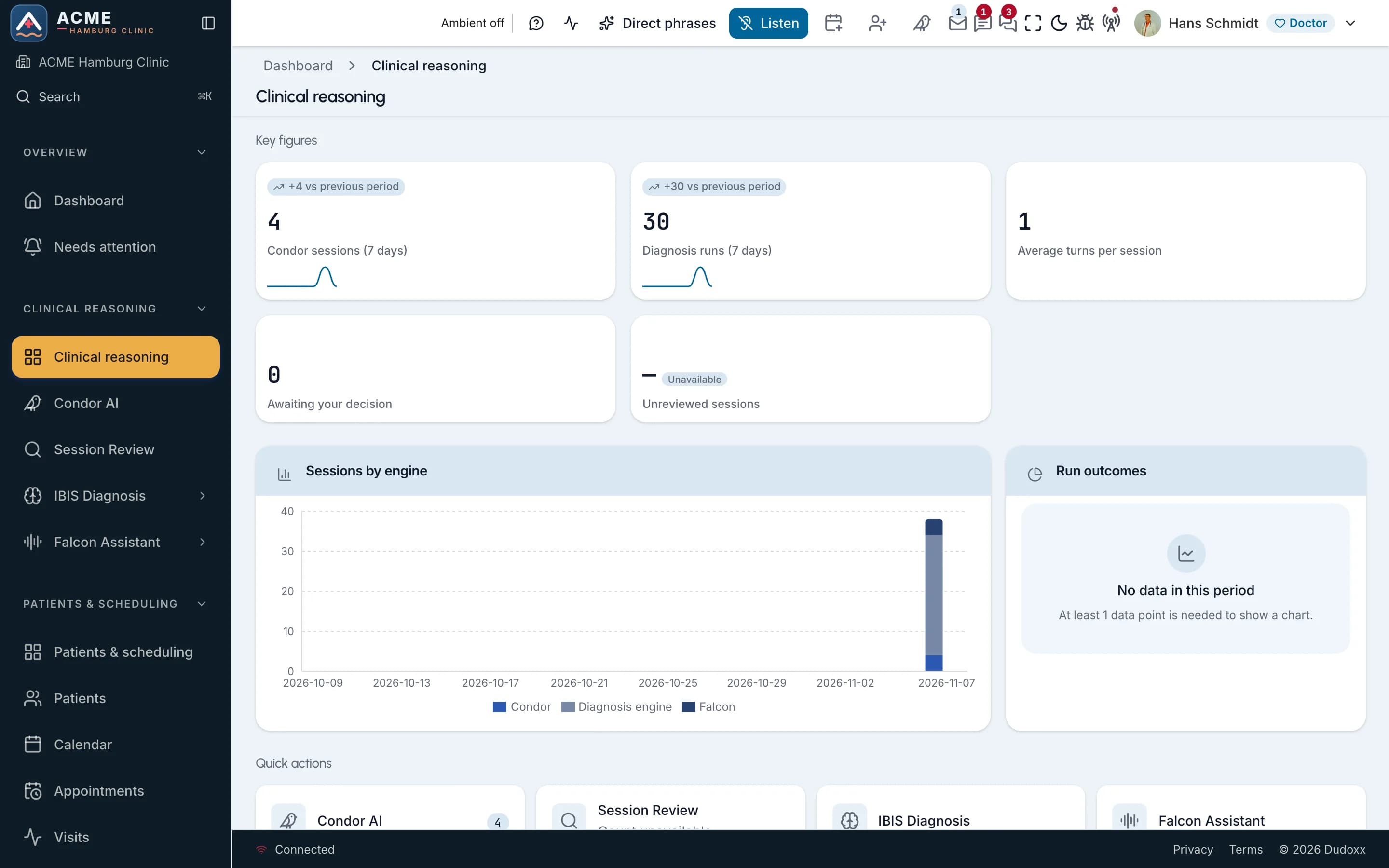
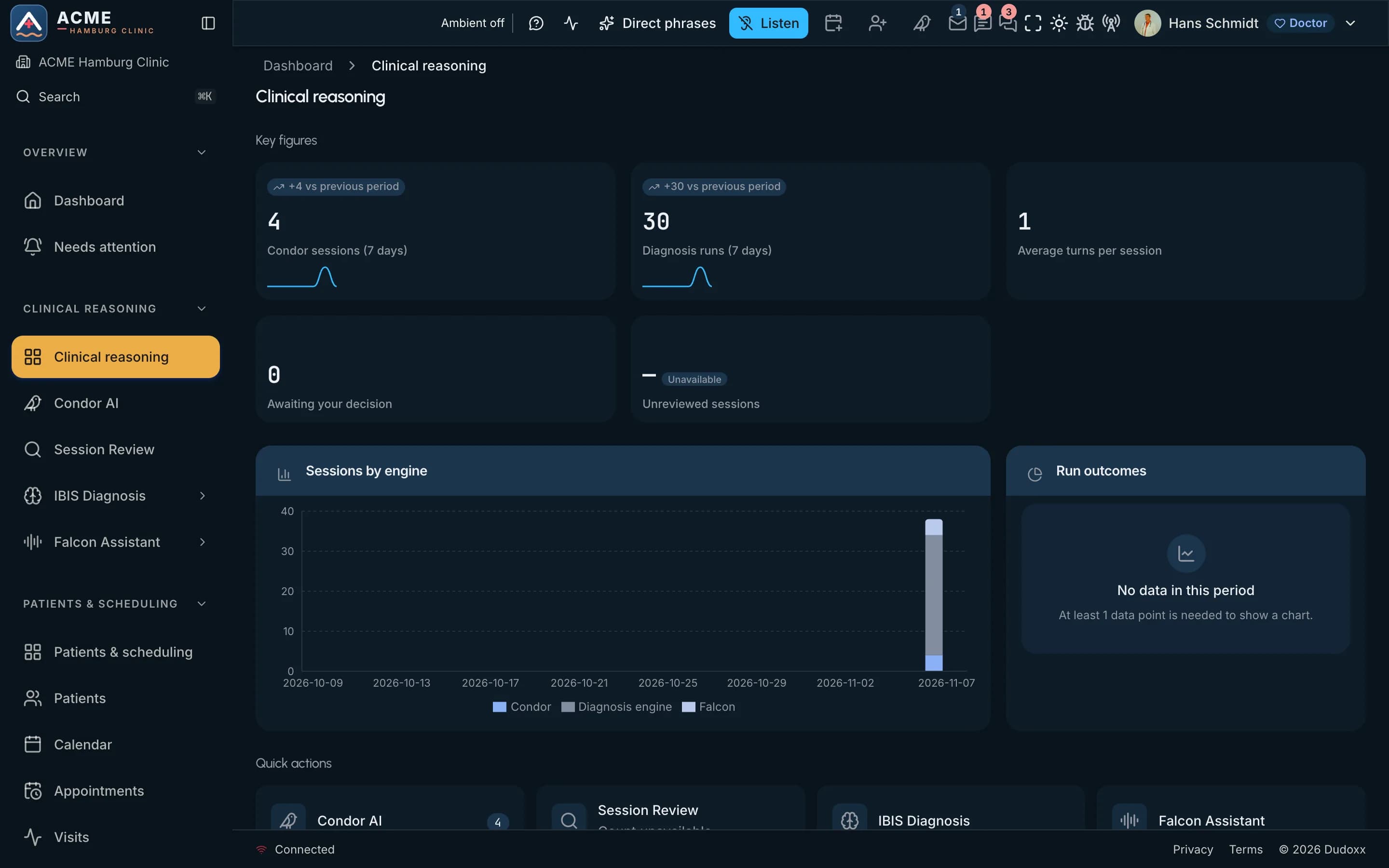
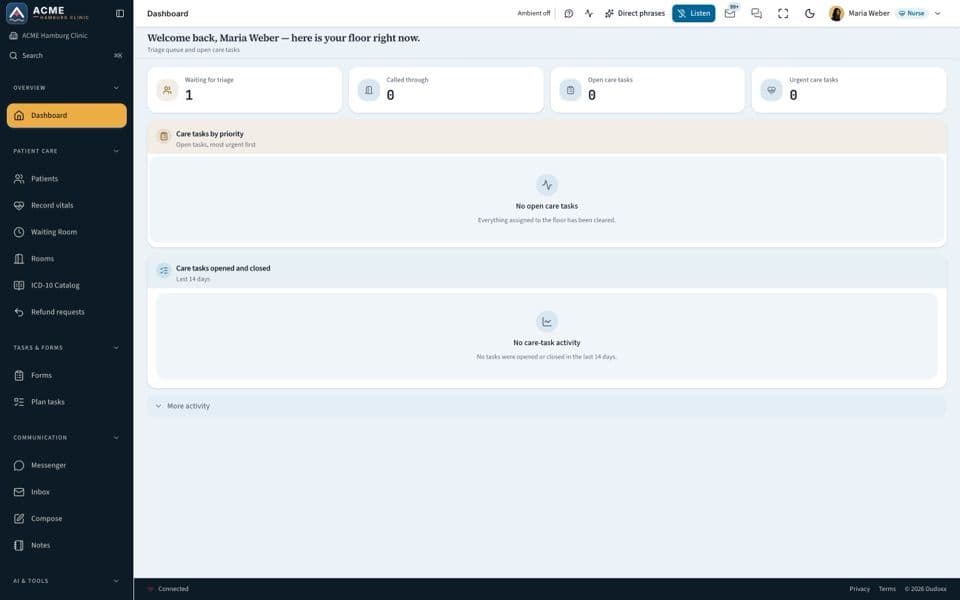
The clinical reasoning overview of a demo clinic: sessions by engine and the way into Condor, IBIS and Falcon.The clinical reasoning overview of a demo clinic: sessions by engine and the way into Condor, IBIS and Falcon.

On the screen

  1. Whole screen
  2. Zoom in
  3. Move across
Real screenThe clinical reasoning overview of a demo clinic: sessions by engine and the way into Condor, IBIS and Falcon.

What the clinical desk asks

The questions come before, during and after every visit. Here is where each answer comes from.
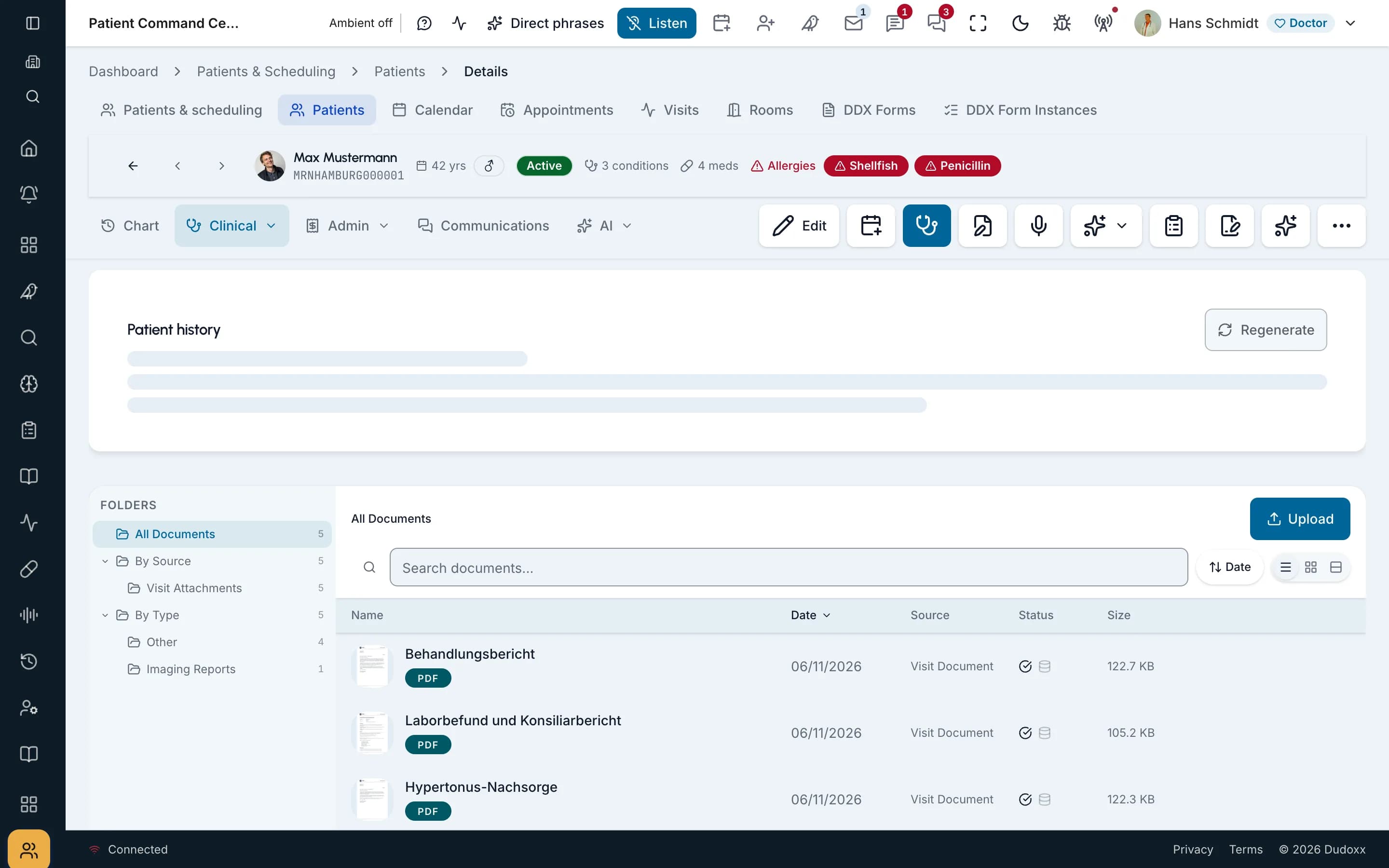
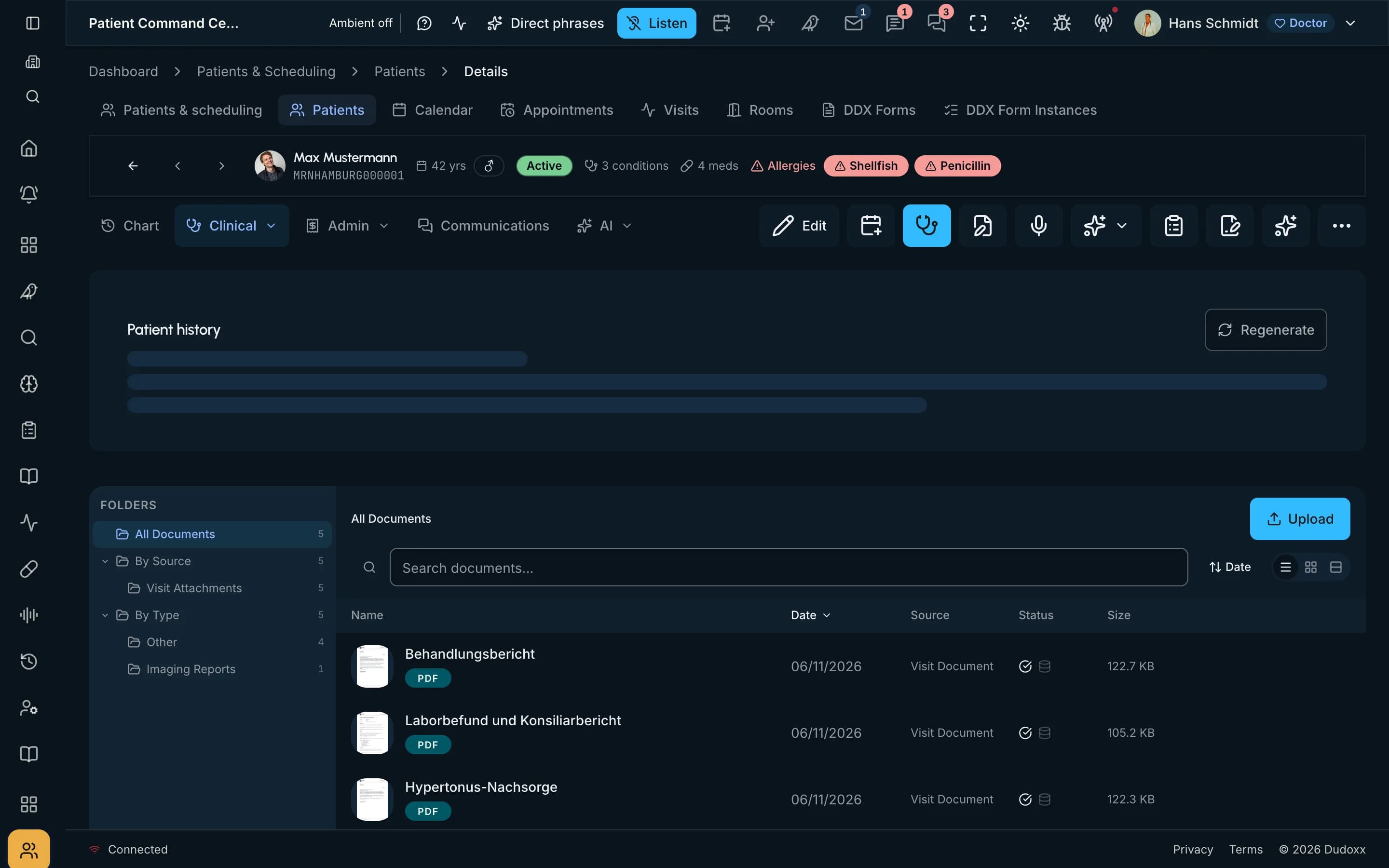
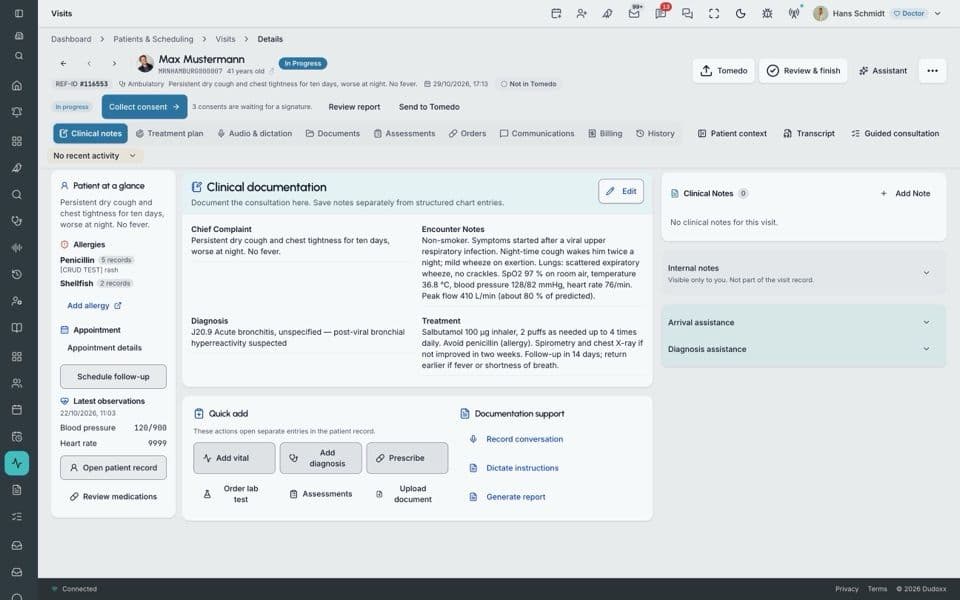
  1. The record of a synthetic patient in a demo clinic: conditions, medicines and allergies in the header, before the visit starts.The record of a synthetic patient in a demo clinic: conditions, medicines and allergies in the header, before the visit starts.

    On the screen

    1. Whole screen
    2. Zoom in
    3. Move across
    Real screenThe record of a synthetic patient in a demo clinic: conditions, medicines and allergies in the header, before the visit starts.

    What should I know before I go in?

    Condor gathers the history from the patient record and shows the steps it took, so you see where each fact came from.

  1. What did the last visit find?

    Earlier letters and scanned reports are filed to the patient record, so the last findings are in the record, not in a folder on a shared drive.

  2. How do I document while I examine?

    In a video visit you take notes during the call, with live transcription. Call notes are saved to the visit.

  3. Which code fits?

    ICD-10 coding support sits beside the note. The suggestion is advisory, and the choice of code stays with you.

  4. Who writes the letter?

    Dudoxx drafts the letter from the visit data. You review it, change what you want and sign it off.

The visit reads the record

History, findings, notes and letters come from one patient record and go back into it, for every desk to see.

A day at the clinical desk: five steps from the patient at a glance to a signed letter Five steps for doctors and nurses. Condor gathers the history from the record and shows its steps. During the visit, notes are taken, by voice if you like. ICD-10 coding support sits beside the note and prescriptions wait for your check. For an unclear case you can ask for advisory differential suggestions. Dudoxx drafts the letter from the visit data; you review and sign off. Condor The patient at a glance Condor gathers the history and shows its steps 1 Notes in the visit by voice if you like, filling guided forms 2 Code and prescribe ICD-10 support beside the note; prescriptions wait for you 3 IBIS A second look advisory differential suggestions; AI suggests, you decide 4 Review and sign off letters and reports drafted from the visit data 5 a person checks

A day for doctors and nurses in five steps: the patient at a glance, notes in the visit, coding and prescriptions, a second look, and letters to review and sign.

Open the full diagram (opens in a new tab)
The clinical chain: seven steps, one specialty pack, one confirmed write Every outpatient specialty runs the same seven steps: appointment, intake, doctor contact, diagnostics, letter, tasks and billing. A Specialty Pack supplies the specialty values as data: intake forms to the intake, OCR and device maps to diagnostics, report templates to the letter, task rules to the tasks and GOÄ code blocks to billing. In the doctor contact, Condor turns the dictation into a visit summary that the doctor accepts. Intake answers, lab and device imports, scanned reports and promoted mail reach the patient record only after staff confirm them, through one write path; its clinical events update open letters with late lab values and fire the task rules. Billing lines start as planned and a human approves each one. THE SEVEN STEPS · THE SAME FOR EVERY SPECIALTY Appointment calendar entry the visit starts here 1 Intake pack form, filled by the patient; staff approve 2 Condor Doctor contact dictation → visit summary the doctor accepts 3 Diagnostics lab and device files scanned reports · Chart 4 Letter pack template · review approve · send to referrer 5 Tasks to-dos created by rules callback requests 6 Billing GOÄ lines: a human approves each one 7 SPECIALTY PACK · SPECIALTY VALUES ARE DATA, NOT CODE 2 intake forms 4 OCR + device maps 5 report templates 6 task rules 7 GOÄ code blocks Specialty Pack: one manifest per specialty · Cardiology · General Medicine ONE WRITE SEAM · NOTHING WRITES ALONE Incoming mail letters staff promote 4 commit · confirm 2 approve Staff confirm first intake approval · lab and device import commit · scanned-report confirm · mail promotion rules fire 6 late lab values 5 One write path then the clinical events Patient record allergies · meds · labs two packs live on two clinics · walkthrough 2026-10-02 arrives pack data · record human checkpoint the one write path

The outpatient chain in seven steps, from the appointment to billing, with the Specialty Pack sections that feed each step. Staff confirm first; then one path writes into the patient record.

Open the full diagram (opens in a new tab)

Questions and answers

Bring your clinic's morning

Book a demo and we walk through a visit from the first context to the signed letter, or follow one whole day through the clinic.